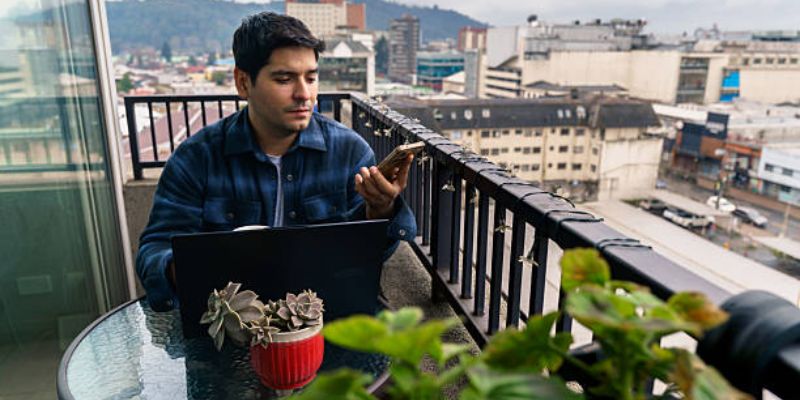




A lot of people picture remote work as a laptop by the sea, but the first stage looks much less cinematic. It usually starts with unpaid practice, awkward client calls, a bad desk, and a growing understanding that location freedom only works when the income side is already doing its job.
The First Goal Is Not Freedom, It Is Stability
Before you book anything or start comparing beach towns, you need a consistent income. A one-off project here and there is encouraging, but it is not enough to support travel when rent, flights, and work tools still need to be paid every month.
Pick One Skill That Solves A Clear Problem
This is where most people waste time. They call themselves general freelancers, offer 5 services, and end up competing with everyone. It works much better when you get specific. Email marketing for small ecommerce brands, technical SEO for service businesses, CRM setup for sales teams, ad creative for coaching companies, or B2B blog writing for software firms are all easier to sell than I can help with anything.
At the $2,000 level, you are not trying to build an empire. You are trying to create a dependable base. In practice, that often means three clients at around $600 to $700 each, or two stronger clients plus one smaller retainer.
Build The Offer Before You Build The Website
You do not need a polished brand first. You need proof that someone will pay for the work. A simple portfolio, a few sample projects, and a clear sentence explaining what you do is enough to begin. Most early remote income comes from direct outreach, referrals, former coworkers, small-business owners in your network, or carefully used freelance platforms, rather than endless job applications.
The First Few Months Usually Look Repetitive
People imagine remote work starts when travel starts, but the real foundation gets built in ordinary life. It is easier to test pricing, delivery speed, client communication, and your own discipline while you still have a stable home base.
Start Small And Keep The Work Recurring
A recurring monthly service is far better than constant one-time scrambling. If you manage email newsletters, update a company's blog, handle reporting, or maintain a client's sales system every month, the income becomes easier to predict. That matters a lot once you are outside your home country and need to know whether next month is covered.

A practical way to begin is simple. Offer one small service, deliver it well, then expand. If you start by writing two blog posts a month for one client, that can later become content, optimization, and reporting.
Use A Basic Work Stack And Stick To It
You do not need twenty productivity tools. A calendar, an invoicing tool, cloud storage, a video meeting app, a password manager, and a reliable messaging platform are enough. The less complicated your setup, the easier it is to keep working from different apartments, cafés, and coworking spaces.
Daily Remote Work While Traveling Is Mostly About Guardrails
Once income starts coming in, the next mistake is assuming travel will somehow make you more productive. Usually, it does the opposite at first—new place, new grocery store, new transport system, new language, new Wi-Fi problem. Every move eats work time.
Workdays Need To Stay Boring
The people who last in this lifestyle tend to keep surprisingly ordinary routines. They wake up, make coffee, work in a predictable block, eat somewhere nearby, and only sightsee after the important work is done. If you treat every day like a travel day, your output drops fast.
Slow travel helps more than constant movement. Staying three months in one city often works much better than hopping every two weeks. You waste less time resetting your life.
Good Neighborhoods Matter More Than Famous Ones
This affects both budget and output. A pretty central district may look tempting, but if it is loud, expensive, and full of short-term party rentals, it gets old quickly. A quieter neighborhood with a grocery store, laundromat, decent cafés, and a coworking space nearby is usually the better choice.
The Math Gets Tighter Faster Than People Expect
Two thousand dollars a month sounds fine until you turn it into actual monthly life. Short-term rent is more expensive than local rent. Workspace costs money. Flights and visa runs add friction. Small mistakes cost more when repeated every month.
A Realistic Monthly Budget Is Not Just Rent
In a lower-cost city, you might spend roughly $800 to $1,100 on a furnished apartment, $150 to $250 on coworking, $250 to $400 on food, $50 to $150 on local transport and SIM data, plus software, subscriptions, and occasional travel costs. Suddenly, the margin feels thinner.
That does not mean the lifestyle is impossible. It means you need Breathing room. An emergency fund matters more than people want to admit, especially if a client pays late or disappears.
Coworking Is Often Worth Paying For
Many new nomads try to save that money and work from the apartment full-time. Sometimes that works. Often it does not. Bad chairs, weak lighting, thin walls, and unreliable internet wear you down quickly. A coworking space can look expensive until it saves a client call, a deadline, or your concentration.
Internet, Time Zones, And Visas Shape The Routine
These are the parts that sound administrative until they start affecting your sleep and your income. Then they stop feeling bored very quickly.
Internet Reliability Is Not A Small Detail
Never trust a listing description without checking further. Fast Wi-Fi can mean almost anything. Ask for a screenshot of an actual speed test before booking. When you arrive, buy a local SIM with a strong data plan immediately. That backup matters the day the apartment internet collapses ten minutes before a client call.
Time Zones Can Quietly Break The Lifestyle
If your clients are in North America and you are in Southeast Asia, your schedule may become unsustainable. Midnight calls, broken sleep, and isolation catch up with people fast. Many remote workers end up choosing regions within a few hours of their main clients because the body adjusts to that better over time.
Stay Limits Change How You Work
Even without getting into country-by-country detail, one fact stays the same. Tourist stays end. Moving often sounds romantic until every move costs money and kills several workdays. The more stable your income becomes, the more valuable longer stays become, too.
Raise Stability Before You Raise Complexity
Do not add new services too quickly. First, to ensure your current work is easy to sell, deliver, and repeat. Then improve rates, tighten systems, and ask for referrals.
Travel Should Come After The Proof
The lifestyle suits people who can handle routine, uncertainty, and self-management simultaneously. Before you go anywhere, get the work stable for a few months, build a cash buffer, and make sure your skills are strong enough so that replacing a single lost client would be possible. That is the real start line, not the flight.